
AI AFRICA WEEKLY
- Nigeria establishes sovereign AI infrastructure through $1.28B university-led innovation hubs, positioning universities as engines of AI commercialization with early-stage ventures already emerging
- Morocco advances continental AI sovereignty with Fusion AI platform deployment and $1.28B AI factory development, creating scalable frameworks for regional digital independence
- African governments accelerate AI-driven operational efficiency, from Ghana's port automation achieving 5-minute customs processing to South Africa's comprehensive national AI policy framework
Nigeria Deploys AI UniPods To Bridge Research-Industry Gap

Nigeria's flagship AI University Innovation Pod at the University of Lagos represents a paradigm shift in African AI development, transforming traditional academic institutions into operational innovation engines. The ₦30 billion initiative establishes fully integrated platforms combining research facilities, startup incubation, and industry collaboration zones across six geopolitical zones. This university-led approach enables efficient resource sharing while maintaining academic rigor, with early-stage ventures already emerging to deliver measurable economic outcomes in priority sectors including agriculture, healthcare, education, and finance.
The UniPod model's technical architecture creates "collision spaces" where scientists, engineers, and innovators converge to transform theoretical research into industrial-scale AI solutions. Unlike isolated innovation centers, these platforms operate within existing university infrastructure, reducing overhead while maximizing talent access. The distributed geographic deployment across Nigeria's regions enables localized AI applications addressing specific market needs while building national capacity for sovereign AI development.
Nexus Core Systems to Build MAD 12 Billion AI Factory in Morocco
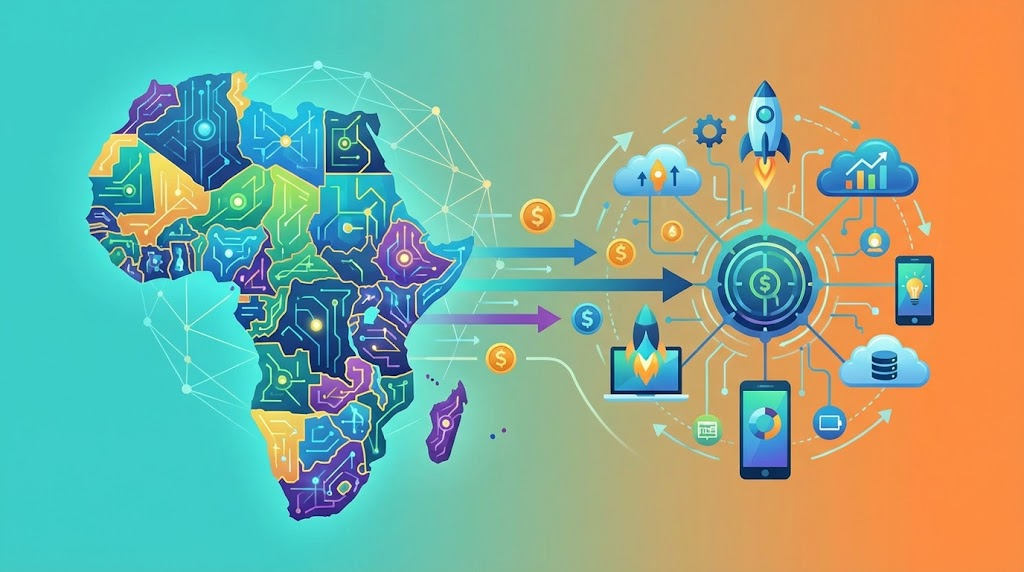
Nexus Core Systems' $1.28 billion MoU with Moroccan authorities marks the largest AI infrastructure investment in Africa, featuring a phased deployment of high-performance computing data centers, Centers of Excellence, and innovation hubs. Phase one allocates 5 billion dirhams for a 16 MW HPC facility powered by Nvidia and Naver Cloud technologies, creating 125 jobs by 2027. The complete project scales to 36 MW capacity, positioning Morocco as Africa's sovereign AI manufacturing hub under the Digital 2030 strategy targeting 270,000 digital jobs and 3,000 startups.
The investment aligns with Morocco's "AI Made in Morocco" initiative projecting $10 billion GDP contribution and 50,000 AI jobs by 2030. Nexus's partnership with Lloyds Capital and government backing through the Ministry of Digital Transition creates structured opportunities for co-investors in African AI infrastructure amid growing continental demand for localized AI capacity and digital sovereignty.
Artificial Intelligence At Ghana's Ports: Reform, Resistance, And The Real Policy Question
Ghana's Revenue Authority deployment of the Publican AI system demonstrates practical AI implementation in critical government operations, automating customs declarations to combat GH₵22.6 billion in tax losses. The system uses historical trade data benchmarking to reduce declaration review times from hours to 5 minutes while minimizing corruption through automated price validation. Despite initial business resistance over processing delays, the implementation showcases iterative deployment strategies that balance operational efficiency with stakeholder concerns through appeals processes and gradual rollout.
The technical approach shifts routine analytics from human discretion to machine-speed processing, enabling officers to focus on oversight while maintaining accountability through error appeals. This gradual pilot phasing with stakeholder feedback demonstrates practical lessons for African AI deployments in sensitive government operations.
UK financial regulators rush to assess risks of Anthropic's latest AI model
UK regulators' urgent cybersecurity evaluation of Anthropic's advanced AI model signals intensifying global regulatory scrutiny that African financial institutions should anticipate. This creates opportunities for African AI firms to develop specialized compliance and risk-assessment tools tailored to emerging markets, positioning local expertise as competitive advantages against imported technologies. African financial sectors can leverage this regulatory momentum to attract global partnerships through proactive compliance frameworks.
Read MoreProject Glasswing: Securing critical software for the AI era
Anthropic's $100M Project Glasswing deploying frontier AI models for zero-day vulnerability detection represents a paradigm shift toward AI-augmented cybersecurity that African ecosystems can access through partnerships with Google, AWS, and Microsoft. African AI professionals should prioritize adopting these defensive AI tools early to protect emerging digital infrastructures while positioning local innovators as contributors in global cybersecurity efforts, particularly given Africa's reliance on imported software and open-source infrastructure.
Read MoreAI collaboration to drive business growth
PwC's study revealing 7.2x higher AI-driven revenues for top performers provides actionable frameworks for African enterprises to leapfrog traditional models in agriculture, fintech, and manufacturing. African companies can adopt enterprise-wide AI integration strategies emphasizing human-AI collaboration and data monetization to compete globally, leveraging the continent's 2,400+ AI companies and AU Continental AI Strategy initiatives for structured workforce reskilling and business model innovation.
Read MoreMorocco's ABA Technology Signs Strategic Deal with Atos to Scale Fusion AI Across Africa
ABA Technology's partnership with Atos deploys Fusion AI platform enabling sovereign AI deployment without foreign hyperscaler dependence, with real-world implementations including digital twins for mining optimization and AI-powered government economic simulations. Strategic alliance positions ABA as scalable integrator amid $1.5T global AI spending, creating co-investment opportunities in pan-African sovereign infrastructure.
Read MoreKhumbudzo Ntshavheni Announces Draft South Africa AI Policy for Public Comment
South Africa's draft AI policy establishes six-pillar framework balancing innovation with ethical regulation, emphasizing phased implementation for sector-specific AI adoption and talent development. Public comment period creates partnership opportunities for AI providers to influence policy and secure early access to regulated implementation markets across the continent.
Read MoreNairobi's Zerobionic Joins Qualcomm's 2026 'Make in Africa' Cohort to Scale AI-Powered Robotics
Zerobionic's selection as Kenya's sole representative in Qualcomm's Make in Africa program highlights East Africa's deep-tech momentum, with AI-powered assistive humanoid robots achieving 92% translation accuracy in school pilots across Machakos and Garissa counties. Equity-free technical mentorship and IP support position the startup for follow-on funding in Africa's hardware-AI convergence market.
Read More🤖 Forward this newsletter to colleagues interested in African AI investment opportunities
🔗 Visit Africa Insights AI for detailed AI market analysis
💡 Subscribe to our main newsletter for broader African business intelligence
© 2025 Africa Insights AI. All rights reserved.
